Art & Science
Science and art are, at their core, doing the same thing: paying close attention to the world and finding ways to make that attention communicable to others.
Adrift Lab has always understood this. We work in some of the most visually extraordinary environments on Earth, studying phenomena — the slow accumulation of plastic in living tissue, the long-term deterioration of ocean health — that resist easy representation. Art helps us find forms for things that data alone cannot carry.
Collaborations
Art for Oceans — Surfboard Auction (2025)
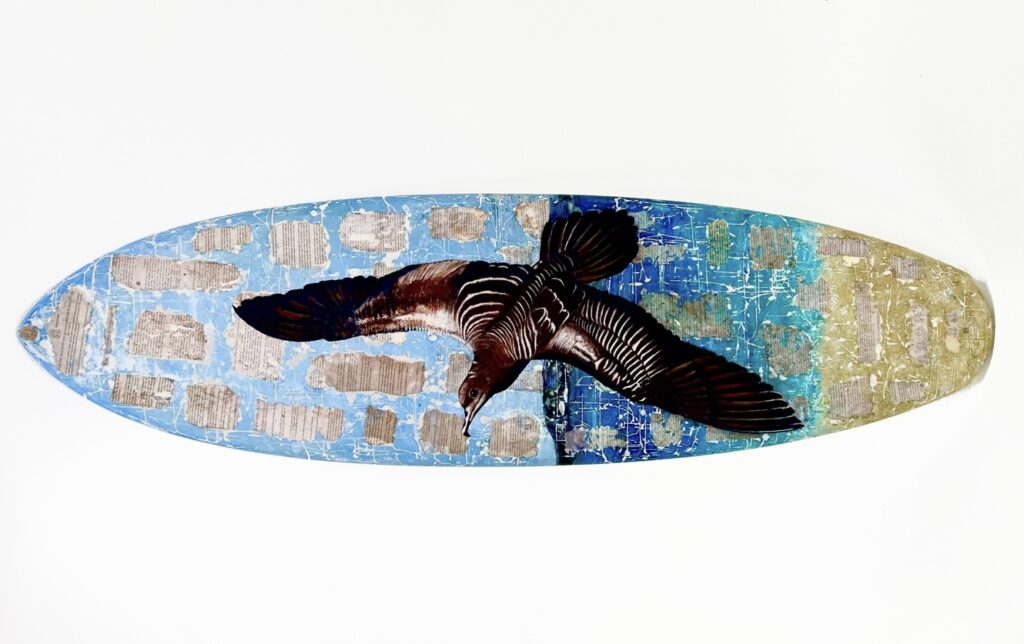
In 2025, Adrift Lab partnered with Living Ocean and artists to produce an auction of painted surfboards, raising funds for our research and bringing our work to audiences well beyond the scientific community. The project connected the visual culture of the ocean — surfing, coastal life, the aesthetic of the sea — with the ecological reality of what is happening below the surface.
PhD Graduation Illustration (2026)
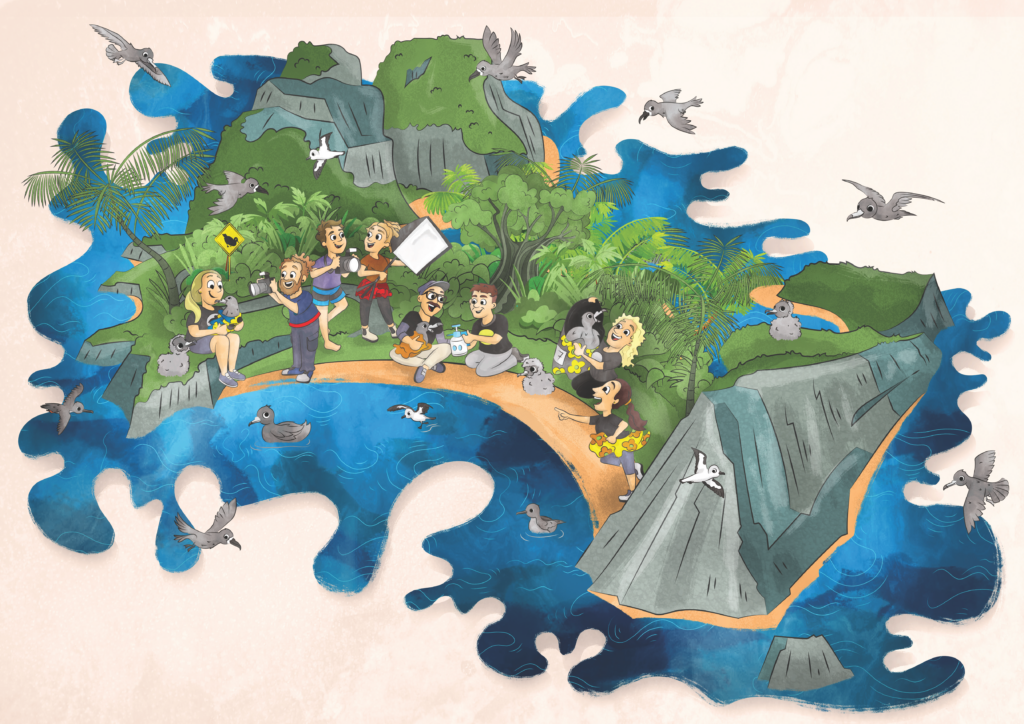
To mark the graduation of one of our doctoral researchers, Adrift Lab commissioned an original art-science illustration that brought together the themes of the thesis — seabirds, plastics, remote island ecology — into a single visual work. The illustration was created in close collaboration between the researcher and the artist, and the result is a piece of scientific communication as much as a celebration.
Why We Do This
We engage directly with policymakers in Australia, the United Kingdom, and through international bodies — submitting evidence, briefing officials, and participating in regulatory consultations. We do not regard publication as the end of our responsibility. The purpose of producing evidence is to see it used.
Work With Us
If you are an artist with an interest in ocean science, marine plastic pollution, or the remote island environments we work in, we would love to hear from you. We approach every collaboration as a genuine exchange — we bring the science, the field experience, and the data; we are genuinely curious about what you bring. You can read about our past collaborations and our ethos here.
We are also happy to talk to educators, curators, and cultural institutions who want to engage our research in exhibition, event, or educational contexts.